

On October 5-8, IBT held a webinar for translation teams on the Apostle Paul's Epistle to the Galatians. The lecturer was Dr. Alexey Somov, one of IBT’s translation consultants.
Nine people took part in the webinar, from the Abaza, Altai, Ossetic, Shughni, and Mordvin-Erzya translation teams. Most of the participants were working on revisions of previously published translations of the New Testament text, while the Abaza translator was translating this epistle for the first time.
The webinar program included two introductory lectures, a separate lecture on each chapter of Galatians, and practical assignments. The sessions addressed both the content of Galatians in the original Greek and the linguistic aspects of translation — in particular, patterns of word usage and syntax in languages from different families.
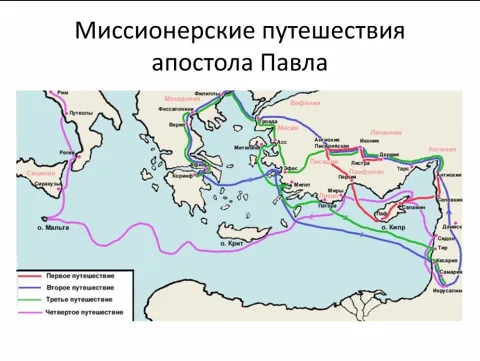
Somov's first introductory lecture was devoted to the life, personality, and theology of the Apostle Paul and gave a general overview of his epistles. The second lecture gave the specific background for understanding Galatians — its theological/exegetical issues and stylistic and historical features. This Epistle, for example, is marked by Paul’s passion and sharpness of style: the apostle is very concerned about the Galatian churches accepting the message of his opponents — preachers of Jewish origin who had come to these churches after Paul and claimed that salvation in Christ was incomplete without observance of the Mosaic Law. Paul, however, believed that justification required only faith in Christ. In this Epistle, the apostle departs from the practice of dictating the letter to a secretary and writes it in his own hand.
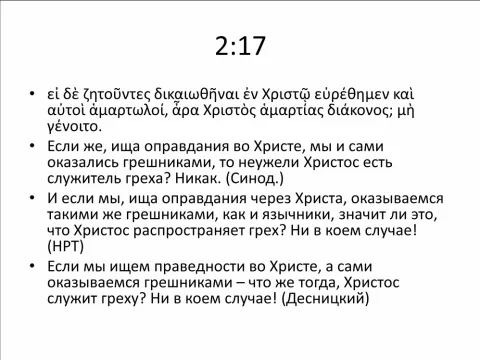
The remaining six lectures were devoted to a detailed, verse-by-verse analysis of the text and a comparison of the Greek original with three Russian translations: the Synodal Translation, the New Russian Translation (NRT), and the translation by Andrey Desnitsky, who is also an IBT consultant. During the verse-by-verse analysis, the translators worked through specific questions: for example, whether a long phrase should be broken up into shorter ones in their language, or whether the active voice should be preferred to the passive.
Somov gave examples of how a particular word could be misinterpreted and which shades of meaning should be avoided. Thus, the address "brothers" should not be understood exclusively as a reference to relatives, and churches as communities should not be identified with church buildings. The phrase "God and Father" should not create the impression of two separate persons, and the words about the Savior's death on the cross "for our sins" should not be understood as indicating that He died because of our sins. It may therefore be quite appropriate to add a clarifying phrase such as "for the redemption of our sins."
At the end of the webinar, the participants thanked the lecturer. Many of them discovered the Epistle to the Galatians anew, which contributed to a higher quality revision of previously completed translations and to the refinement of the new Abaza translation.